
Water Retention Built for East Texas Clay
Pond Installation in Cleveland for rural property owners needing livestock water, recreation ponds, or drainage retention on acreage with seasonal run-off
Wrong excavation depth and poor dam placement cause seasonal dry-out and bank collapse that a generic dig won't prevent, even though East Texas clay soil is ideal for natural pond retention. Pond depth, spillway design, and dam placement are engineered around the local water table and East Texas rainfall patterns before excavation begins. SendMe Pro Services serves rural properties near Lake Livingston and throughout San Jacinto and Polk counties, handling livestock tanks, recreation ponds, and drainage retention all coordinated with land clearing, dirt work, and grading so the full pond site is prepared and stabilized in one sequence.
The site is read for upstream run-off and subsurface clay layers before excavation begins, which prevents the most common failure points seen on East Texas rural acreage. Spillway location and dam compaction determine whether the pond holds water through summer dry spells or whether banks erode and the basin silts in after the first flood season. Owner Robert Jamieson leads the project so you talk to the same person from estimate through final grade.
Call (832) 299-5566 or email info@sendmeproservices.com to get on the schedule before flood season and summer dry spells complicate the build window.
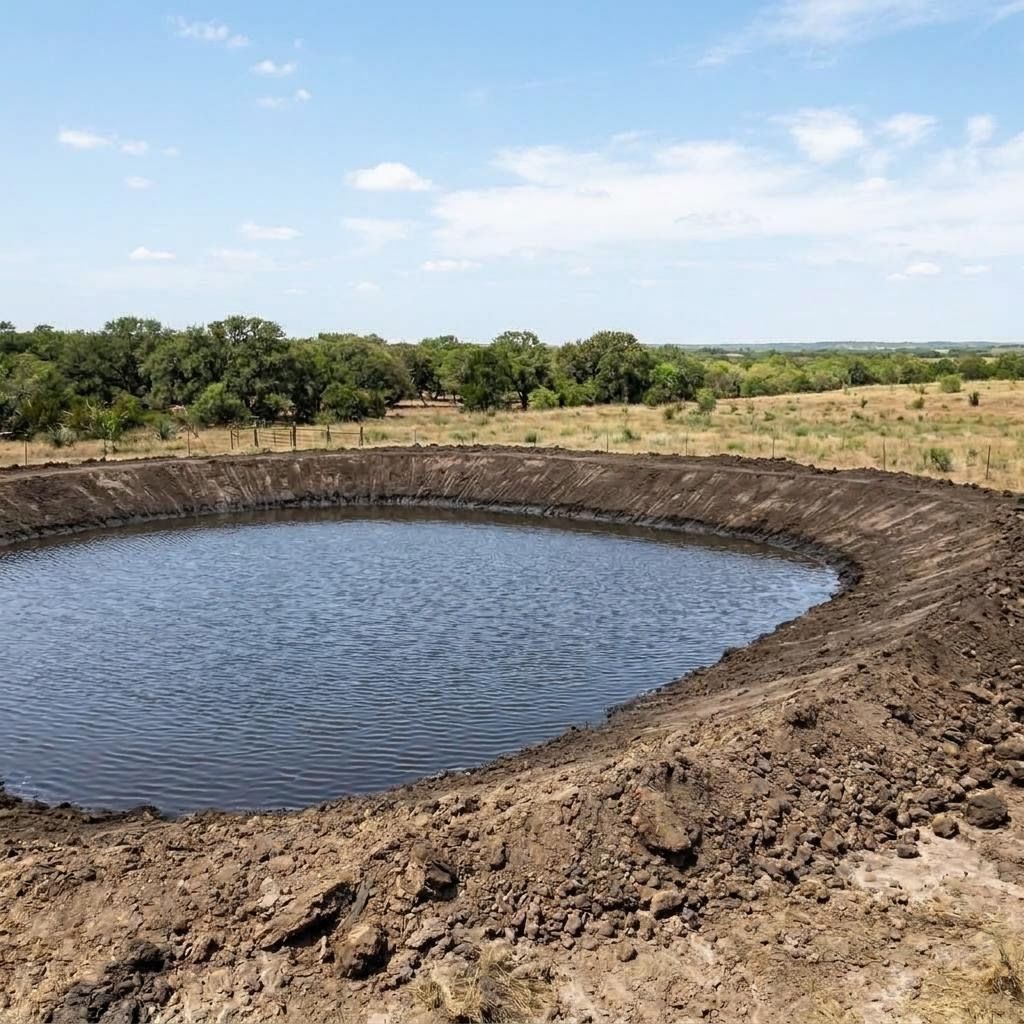
How Pond Construction Prevents Common Failures
Excavation depth is calculated based on seasonal water table fluctuation, planned use, and how much sediment will settle over time. Shallow ponds dry out in July and August when the water table drops, while over-excavated sites waste dirt and create unstable banks that slump into the water. Dam placement controls overflow direction and prevents erosion channels that wash out during heavy rain, and clay core compaction in the dam body determines whether the pond leaks or holds water year-round.
After construction wraps, you see a filled pond with stable banks, a functional spillway that handles overflow without cutting into the dam, and water depth that supports livestock access or recreation use. The pond holds through dry months without becoming a mud pit, and the banks don't collapse into the water after the first hard freeze or spring storm.
Pond projects pair with site clearing and access road work when the property needs multiple phases completed in coordination. Licensed and insured work means the excavation, grading, and dam construction meet standards that prevent failure and liability down the road.
What Property Owners Want to Know First
Planning a pond on rural acreage raises questions about site selection, water retention, and how the work fits into property development timelines. Here's what gets asked most often.
How deep does a pond need to be to hold water year-round in East Texas?
Depth depends on water table levels and soil type, but most recreation and livestock ponds are excavated to at least eight feet in the center to account for sediment accumulation and seasonal draw-down.
What's the difference between a livestock tank and a recreation pond?
Livestock tanks are designed for animal access with gradual slopes and shallower depths, while recreation ponds include deeper zones, steeper banks, and sometimes aeration or stocking plans for fish.
Can a pond be built to handle drainage and run-off from other parts of the property?
Retention ponds are sized and shaped to capture upstream flow, with spillways and outlet structures that manage overflow without flooding downstream areas or eroding the dam.
What site conditions in Cleveland make pond construction harder or easier?
Properties with clay-heavy soil and natural low spots retain water better, while sandy or rocky sites may require clay core dams or liners to prevent seepage.
How long does pond installation take from clearing to filled basin?
Timelines depend on site prep needs, excavation volume, and weather, but most projects move from cleared ground to graded pond in a matter of weeks once equipment is on-site.
SendMe Pro Services handles pond installation across Cleveland and surrounding East Texas counties. Schedule a property visit to review site conditions, discuss pond size and use, and outline the construction timeline. Call (832) 299-5566 or email robert@sendmeproservices.com for a free estimate.