
Access Routes Built for Regular Use
Driveways & Ranch Roads in Cleveland for properties where seasonal rain and vehicle traffic affect access
Heavy rainfall and changing terrain turn unimproved access routes into rutted, muddy obstacles across rural Texas properties. Driveways and ranch roads that aren't properly graded or surfaced deteriorate quickly under truck traffic, delivery vehicles, and equipment hauling, leaving property owners repairing washouts and filling holes after every storm. SendMe Pro Services builds access routes shaped to shed water, resist rutting, and support the vehicle weight your property sees throughout the year.
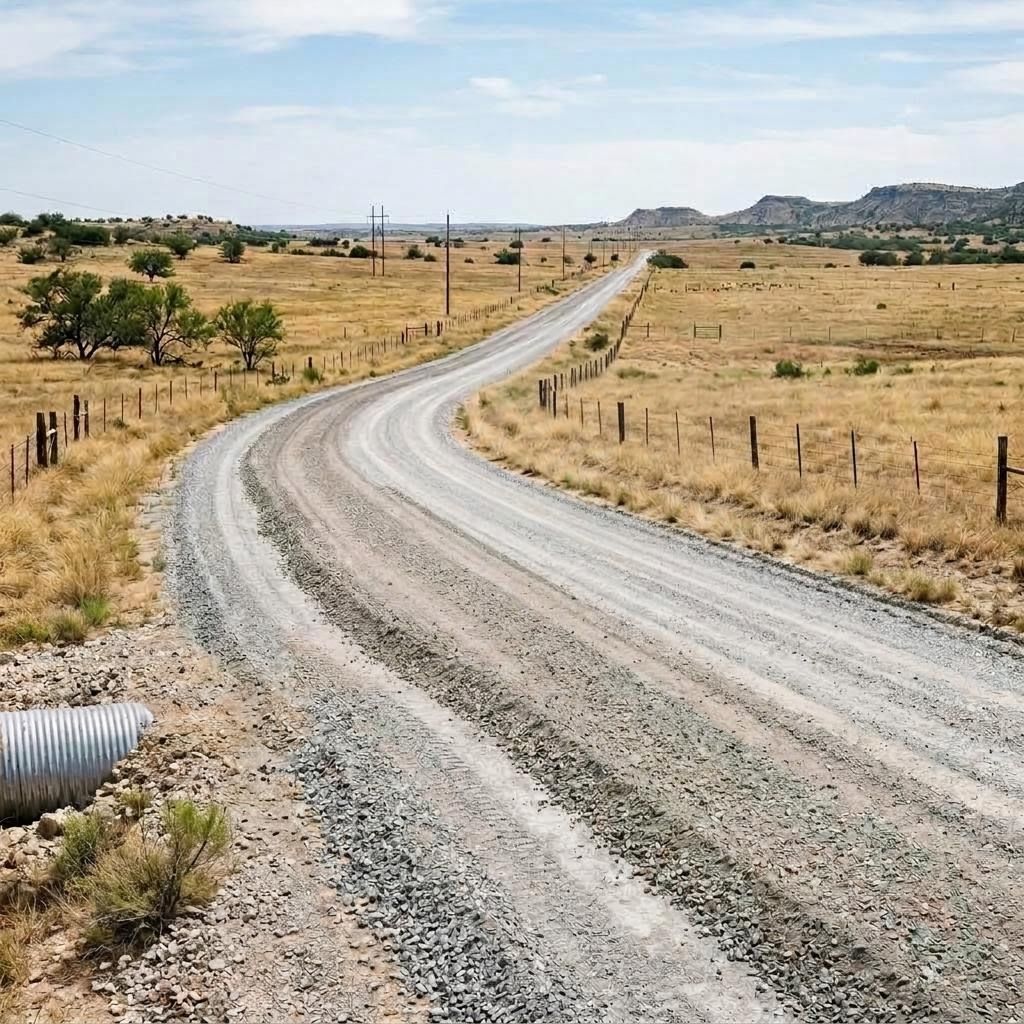
Ranch road construction starts with route planning that considers existing topography, drainage patterns, and how water moves across the property during rain. The roadbed is excavated to stable soil, shaped with a crown or cross-slope to push runoff toward ditches, and surfaced with compacted base material that distributes vehicle weight without breaking down. In areas with heavy clay soil common to San Jacinto and Montgomery counties, additional base depth prevents the roadbed from becoming soft and impassable during wet months.
Request a free estimate to discuss route planning and surface options for your driveway or ranch road project.
Why Route Preparation Works for Long-Term Access
Functional access routes depend on subsurface preparation that most property owners never see once the road is finished. The roadbed is shaped to a consistent grade that prevents water from pooling in low spots, while side ditches or culverts allow runoff to cross under the road without washing out the base material. Base layers are compacted in lifts to create a stable platform that doesn't shift or compress under repeated vehicle loads.
After construction, your driveway or ranch road drains quickly following storms, remains firm under truck and trailer traffic, and no longer develops ruts or soft spots that require constant regrading. Vehicles access the property year-round without getting stuck, delivery trucks reach buildings without damaging the route, and maintenance becomes an occasional surface touch-up instead of a recurring repair cycle.
Route width, base depth, and surface material are chosen based on expected vehicle types, frequency of use, and whether the road serves residential access or working ranch operations. Those decisions affect both upfront construction cost and how often the road will need attention over the following decades.
What Property Owners Usually Ask
Landowners building new access routes or replacing failing driveways typically want to understand material choices and how construction decisions affect long-term performance.
How wide should a ranch road be for truck and equipment access?
Most working ranch roads are built 12 to 14 feet wide to allow single-lane truck traffic with room for mirrors and trailers, while two-lane routes used by multiple households or heavy equipment need 18 to 20 feet of stable roadbed width.
What base material is used for driveways in ETX?
Crushed limestone or road base aggregate is commonly used in East Texas because it compacts tightly, resists erosion, and provides a stable surface that handles both passenger vehicles and heavier trucks without rutting.
When is culvert installation required during road construction?
Culverts are installed wherever the road crosses a natural drainage path, low area, or ditch that carries stormwater—without them, runoff undermines the roadbed and creates washouts that block access after heavy rain.
Why do some driveways develop ruts while others stay firm?
Rutting occurs when the base layer is too thin, poorly compacted, or built over soft soil that wasn't excavated—vehicles compress the weak base material, creating depressions that trap water and worsen with each use.
What's the difference between a residential driveway and a ranch road in terms of construction?
Ranch roads typically require deeper base material and wider roadbed to handle heavier vehicles, frequent use, and longer route lengths, while residential driveways are built for lighter traffic and shorter distances from the main road to the home.
SendMe Pro Services is a Christian-based company that handles driveway and ranch road construction fully custom from the ground up. Reach Robert Jamieson at (832) 299-5566 to review your property layout and plan an access route that holds up under the conditions your land sees.