
Water That Moves Where It Should
Grading & Drainage in Cleveland for properties with standing water and uneven terrain affecting usability
When rainfall pools near buildings, floods access routes, or turns low areas into standing water that doesn't drain, the problem isn't just weather—it's ground contour and slope that trap water instead of moving it off the property. SendMe Pro Services shapes land to control runoff direction and establishes drainage paths that keep water away from structures, driveways, and functional outdoor areas. Proper grading corrects elevation problems that cause flooding and erosion while making properties more usable after storms.
Grading involves reshaping soil to create controlled slopes that direct water toward planned drainage routes, away from foundations and building pads. Drainage planning identifies where runoff accumulates, where it needs to flow, and what barriers—like flat areas, soil berms, or inadequate ditches—are preventing water from leaving the site. Heavy Texas rainfall in Liberty and Polk counties can deliver several inches in a single storm, overwhelming undersized ditches or poorly sloped ground that worked fine during dry months.
Request a grading and drainage assessment to evaluate site conditions and identify where water movement needs correction.
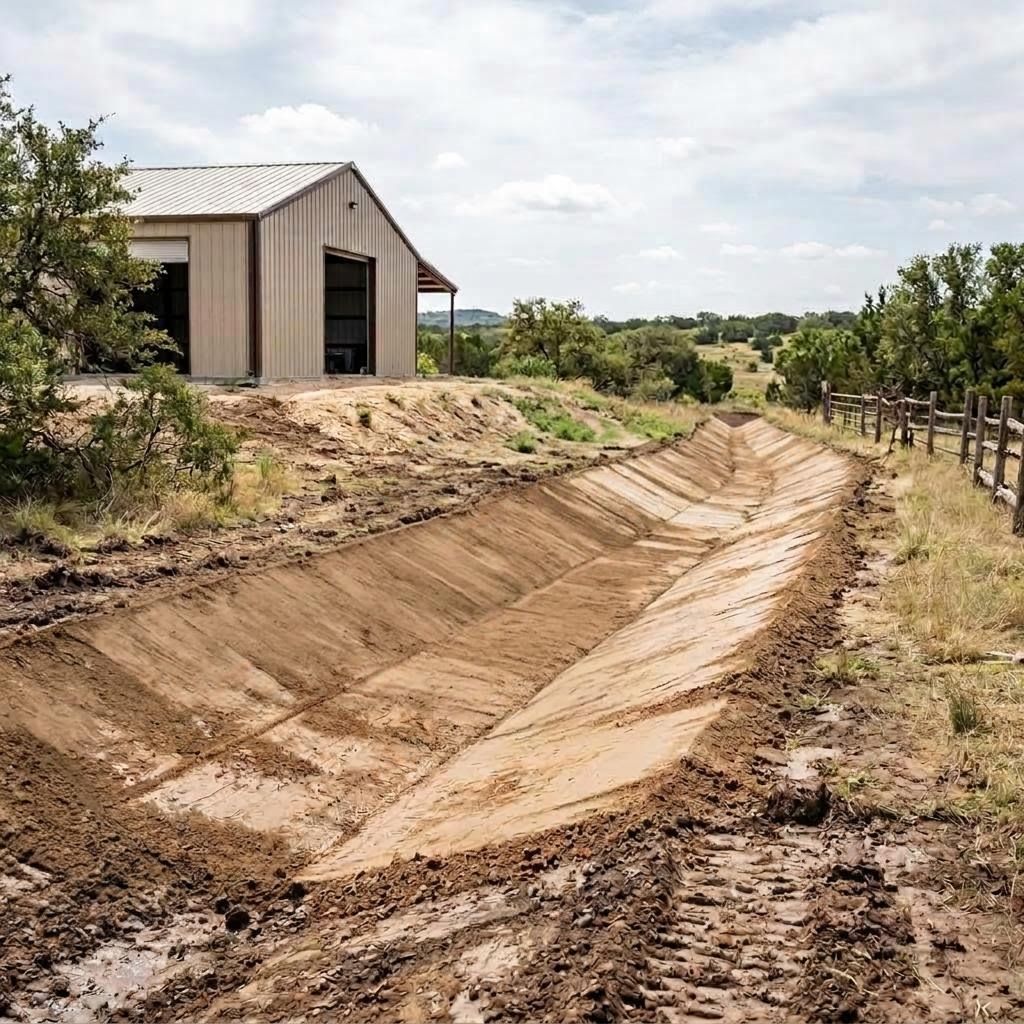
How Grading Addresses Drainage Problems
Correcting drainage starts with understanding where water enters your property, where it collects, and where it should exit. Low spots are filled and regraded to eliminate depressions that trap runoff, while slopes are adjusted to maintain a consistent grade that keeps water moving. Ditches or swales are cut along property edges or access routes to intercept runoff before it reaches buildings or paved areas.
After grading and drainage work is complete, rainwater flows away from buildings instead of pooling against foundations, driveways dry faster because runoff isn't trapped on the surface, and muddy areas that stayed wet for days after storms become functional space within hours. Erosion along access routes slows because water is redirected into controlled channels instead of cutting across roadbeds.
The scope of grading work depends on how much elevation change is needed, how far water must be moved, and whether existing drainage infrastructure like culverts or ditches can be improved or needs full replacement. Some properties require only minor slope adjustments, while others need extensive reshaping to correct years of runoff damage.
Common Questions About This Service
Property owners dealing with recurring water problems often want to know how grading and drainage work is planned and what results they should expect once the site is reshaped.
What causes standing water to accumulate near buildings?
Standing water collects where ground slopes toward structures instead of away from them, or where soil compaction and flat areas prevent runoff from draining naturally—grading corrects those elevation problems by reshaping the surface.
How much slope is needed for proper drainage?
Most building areas require a minimum slope of 2 to 5 percent away from foundations for at least 10 feet, which translates to roughly 2 to 6 inches of elevation drop—steeper slopes move water faster but can cause erosion if not managed with ditches or ground cover
When should drainage correction be done relative to other site work?
Drainage work should be completed before driveways are paved, landscaping is installed, or final grading around buildings is finished, because major slope changes affect where all other site features need to be placed.
Why do some properties in Cleveland need more drainage work than others?
Properties with heavy clay soil, minimal natural slope, or locations in low-lying areas experience more drainage problems because water doesn't percolate into the ground quickly and has fewer natural exit paths compared to properties on elevated, sandy sites.
What's included in drainage correction versus what requires separate work?
Grading and surface drainage shaping are part of the correction scope; installing subsurface drain lines, culverts larger than basic ditch crossings, or engineered stormwater systems may require additional design and permitting.
SendMe Pro Services evaluates drainage problems on residential, agricultural, and rural properties throughout ETX. Call (832) 299-5566 to schedule a site visit and review how grading can keep water moving away from the areas where it's causing problems now.